Commercial Waste Deptford: Recycling and Sustainability
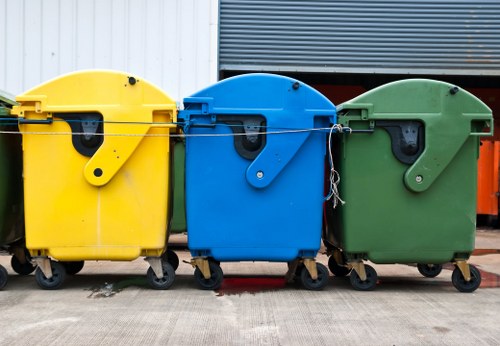
In Deptford, our commitment to creating an eco-friendly waste disposal area and a truly sustainable rubbish area underpins every service we provide. As a hub for local businesses and independent traders, Deptford commercial waste management focuses on practical separation, reuse and lowering the carbon footprint of collections. We combine practical on-the-ground solutions with strategic partnerships so that commercial waste in Deptford becomes a resource, not a burden.Our approach aligns with borough-level policies that emphasise clear waste separation: food and organic waste, dry recyclables (paper, card, plastics, metal and glass), and properly contained residuals. By mirroring the boroughs' approach to waste separation, we make it easy for businesses to adopt consistent, compliant routines. Staff training, labelled containers and clear collection schedules are core to creating an accessible sustainable rubbish area at every site.
Targets for Recycling and Performance
We have set an ambitious recycling percentage target: a 65% recycling rate within five years, with a strategic trajectory toward 70% by 2035. Performance is tracked across commercial collections, transfer station throughput and partner reuse schemes. This measurable target drives route optimisation, improved containerisation and targeted outreach to businesses with higher waste complexity, such as hospitality and retail outlets in Deptford.To process increasing volumes responsibly we work with local transfer stations and materials recovery facilities serving Deptford and neighbouring Greenwich and Lewisham boroughs. These transfer stations act as staging posts where materials are sorted, baled and redirected to specialist recyclers. Typical flows include:
- Paper and card baled for pulping and repurposing
- Glass, metals and plastics sorted for closed‑loop recycling
- Commercial food waste sent to anaerobic digestion or in-vessel composting

Partnerships with Charities and Reuse Groups
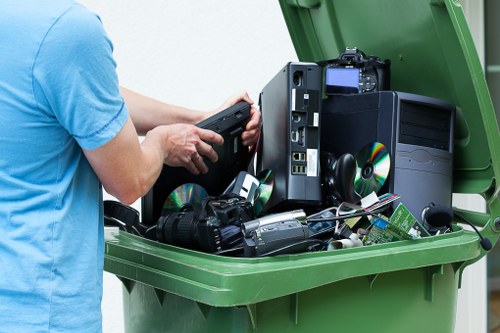
We prioritise reuse through active partnerships with local charities and social enterprises. Unwanted furniture, surplus textiles, and working electronics are diverted to accredited community partners for refurbishment and redistribution. These collaborations support local employment and social value while reducing landfill. Examples include furniture reuse programmes, community fridges that coordinate with food redistribution groups, and e‑waste refurb initiatives that extend product lifecycles.Our Deptford commercial recycling services are designed to support a wide range of businesses. Services include segregated dry recycling collections, weekly food waste lifts for restaurants and cafes, and scheduled bulky collections that prioritise donation and refurbishment. We also help clients set up clear storage zones — designated sustainable rubbish areas that make separation intuitive and auditable.
 To minimise operational carbon, our fleet increasingly uses low-carbon vans: electric light-commercial vehicles, hybrid models for longer runs, and cargo e-bikes for short urban hops. Route optimisation software reduces mileage and idling, while consolidated neighbourhood stops lower emissions per tonne collected. In addition, we monitor fuel use and CO2 savings, reporting progress against our recycling percentage target and overall emissions reduction goals.
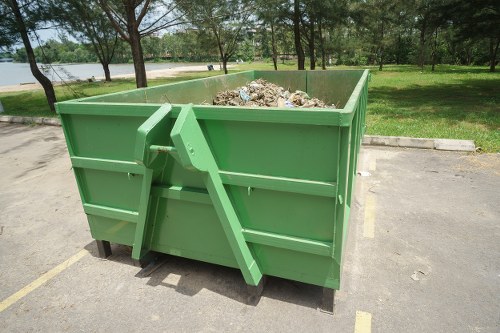 We maintain strong relationships with licensed processing partners to ensure hazardous and specialist wastes are handled safely and sustainably. This includes solvents, certain commercial batteries and R&D by-products. For mainstream recyclables, the focus remains on resource recovery and quality streams: contamination reduction campaigns and clearer labelling so materials reach reprocessors intact.
Practical recycling activities in the Deptford area reflect urban realities: food waste collections for markets and restaurants, separate glass banks for evening-economy venues, and targeted textile collections near community hubs. Our teams work with borough schemes to support dry mixed recycling separation at source — reducing mixed loads and improving the value of recovered materials.
We also run enterprise-level programmes to increase reuse. Businesses are offered options to consign surplus stock and display stands to charity partners, or to schedule refurbishment pickups for electronics. These initiatives create circular pathways where usable items are recirculated within the local economy, supporting both sustainability and social outcomes.
Measuring success means transparent reporting: tonnages diverted from landfill, percentage of recyclable streams captured, and annual carbon footprint reductions from fleet improvements. By combining operational best practice, local transfer station capacity and charity partnerships, Commercial Waste Deptford turns sustainability ambitions into real, measurable outcomes — building a resilient, low-carbon waste ecosystem for the area.
